

Running multiple projects with Agentic Development is very common. I found myself creating GitHub issues for all the ideas I’ve had in the past, while I’m not running a prompt straight away. It’s fantastic for progression, but not always for success. It becomes mentally challenging, and it’s easy to find yourself lost in multiple projects instead of reaching goals.
Agentic development is still relatively new, and many engineers haven’t even fully adopted the workflow yet. Getting started is just the beginning; optimizing your AI fundamentals will drastically impact what you achieve and how. As I’m nearly writing any code myself anymore, I’m happy to share you my best practices on running multiple projects with agents.
It’s the Champions League of development
The Champions League requires a strict diet, focus, and perfect health. Any top athlete knows this, and we all know it too, to reach the highest achievements in sports. It’s not the best practice for agentic development, and I believe that’s wrong.
Back in the days when I was working full-time at WeTransfer, I often found myself coding for 2 hours straight. The more senior I became, the less often that happened, but I do remember how it could drain my energy. I was fulfilled after those two hours, but it required mental attention and a different energy than fixing a quick bug.
Running multiple agents at the same time feels like I’m coding for 2 hours consistently. I’m now an independent developer, meaning that I can do whatever I want. At least theoretically, I still need to maintain focus. However, that has become surprisingly difficult due to the possibilities we now have (more on that later).
For me, a good night’s sleep, no or less alcohol, relaxing time with the family, and a strict focus and clear goals make an enormous difference in my achievements. I’ve always believed in making offers in return for growth, and I see that effect now more than ever. My mental health is the driving force behind running multiple agents at the same time.

Context switching in Agentic Coding
While we have the option to do multiple things at once, we also control what we focus on. I’ve had a period where I would launch multiple agents across multiple context domains: that was a mistake.
The mental overhead of having to context switch constantly is draining and inefficient. For example, I can run multiple agents for multiple different tasks in RocketSim, but I should not also work on another Swift project like Stock Analyzer. Instead, I try to balance 1 or 2 projects that either have something in common or are completely different in terms of mental energy.
With the latter I mean that I could work on something like a fix of my Concurrency Course lessons. It’s a different mental switch compared to diving into a paywall optimization task for Stock Analyzer while also working on a new feature for RocketSim.
You can build anything, but you should not (always)
I’ve had a moment where I’d jump on incoming support requests right away. Agentic development makes it easier than ever to jump directly to a fix instead of opening a GitHub issue and planning ahead.
While this is objectively true, the reality is that it still distracted me from my most important goals for the week. It would still drain energy and added mental distraction that I could not apply to the things that matter most.
Fixing a support ticket is even a small example. I’ve also seen engineers building new apps, new concepts, straight away. Or they release a new open-source project, not realizing it takes time and energy to maintain each repository you open. It takes time and energy to make a new app successful. The direct boost you gain from building something new, will bite you back weeks after when you realize you’re just 80% on your way and it takes at least as much time to fix the final 20%.
Intrinsic motivation is the boost for success
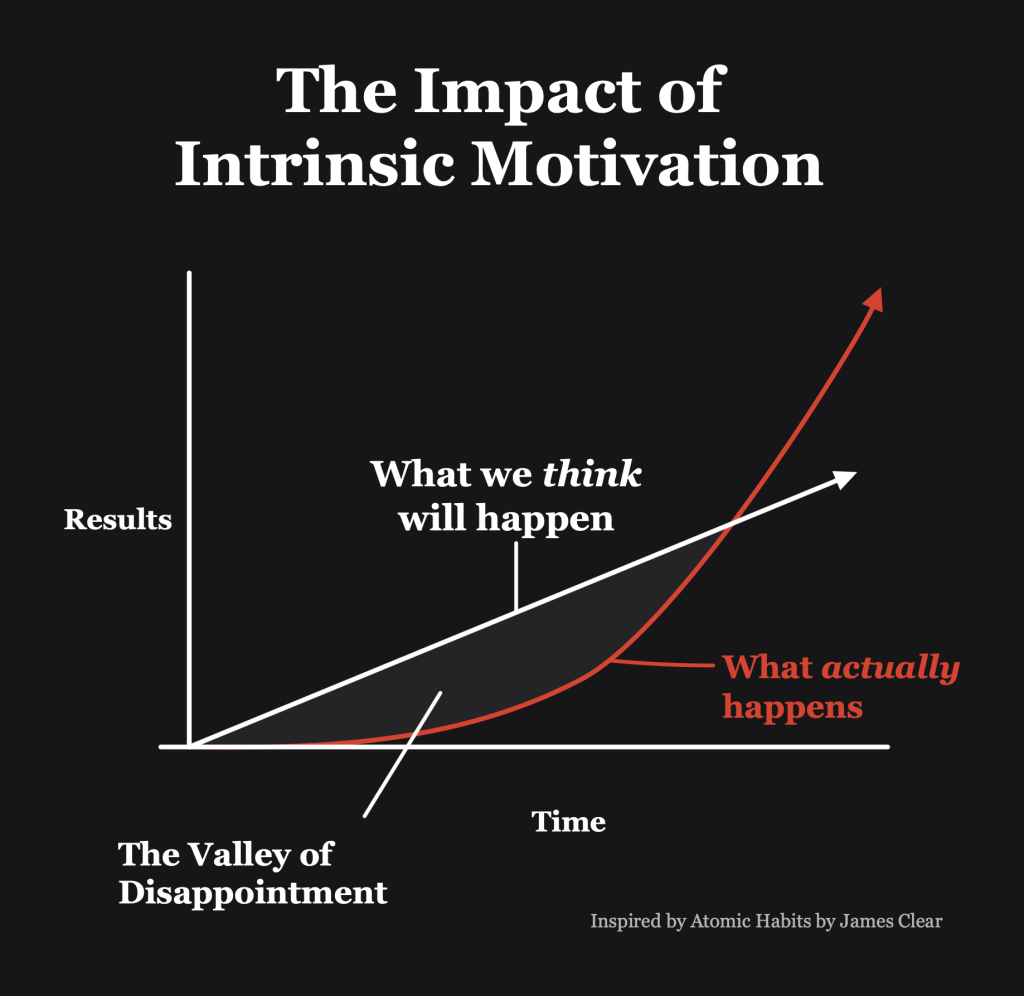
If you’re genuinely excited about something, you should totally build it. Agentic development makes it more than ever possible to achieve those ideas. This article should definitely not stop you from doing so, but there should be intrinsic motivation behind the decisions you make.
Of course, a small feature or bug fix that at most can distract you for a few hours is different than an entire new app. If at most, I’d aim for a proof of concept to help you validate whether it’s worth spending more time, after which the intrinsic motivation might come from early results.
Don’t just build something because you can, don’t do it just for the money, make sure you start working on something you know you’re willing to work on for months, or years. If that’s the case, it’s worth the distraction, it’s worth the shift, but only if it’s more prioritized than the work you already do.
Speed equals productivity
Fascinating to think of, with agentic coding in mind, isn’t it?
The faster you are, the more productive you are. It might make sense, but it was not necessarily the case before I used AI in my development workflow. Agentic development speeds up your progressions, speeds up your productivity. The key is to apply that speed on the right things, and you’ll definitely reach higher growth.
At the same time, optimizing your environment is more impactful than ever before. If you encounter repetitive tasks, automate them. Learn how to create custom Agent Skills, or install open-sourced Agent Skills.
For example, you’re likely spending quite some time on reviewing the code generated by AI (at least, I hope!). If you can optimize the coding quality upfront, you’ll spent less time reviewing afterwards. That’s why I generated these iOS development agents for myself (and for you):
And there are many more open-sourced skills that can directly improve the quality of your agents. There are MCPs to connect your tracking and revenue data, you can convert scripts into reusable commands, or use a well-designed AGENTS file for the project at hand.
Plan, Build, Review, Compound
Whenever I work with an agent, I always ask it to plan the work ahead. Even when I think “This is probably easy enough to prompt without planning”, I still use plan mode. I’ve so often been surprised to see mistakes in a plan for a simple task.
After executing the plan, I review the outputs in detail. I also invite an external agent (e.g. Copilot) on the PR for an agentic review without context. The combination of both has helped me speed up my process quite a bit.
Everything I develop is well-tested, even more with agentic coding. Agents needs guidance and tests offer these strict specs.
Yet I often encounter unexpected results in agentic development. It could be as simple as introducing new logic that’s already in the project. In those cases, I would ask the agent to compound before finishing.
With this, I mean compounding learnings and making sure the same mistake does not happen again. A prompt would be:
“Update the AGENTS.md file to ensure <mistake> does not happen again”
This way, I help my future self commenting about the same mistake. I train my agents to be the best possible copy of myself. If you will, you can even automate this with so-called session-hooks. These exist in tools like Cursor and can create automatic compounding. For example, you could have a session-end hook that will use the context of the session to optimize the AGENTS.md file automatically. Or, you can use a periodic automation that reads all the agent sessions from the past week to do so.
Conclusion
The possibilities are endless with Agentic Development, the risks are so too. I truly believe you need to look at it as if it’s the Champions League of development. Constantly seek for a better version of yourself and your agents, and I’m sure you’ll reach higher goals much more quickly.
These workflows are just the beginning and a subset of what I’ll train in my dedicated course. I’d love to welcome you to it: Agentic coding fundamentals for developers.
See you there?